The following is a sampling of the Coastal Algonquian language that was translated by Dr. Blair A. Rudes at the request of Coastal Carolina Indian Center in 2006. We’re thankful to Dr. Rudes for his assistance with this project. We are saddened by his unexpected passing in 2008 — not only by the loss of a dear friend — but also that we have lost the opportunity to learn from further work he intended to do on the Carolina/Virginia Algonquian language. [Read more…] about Coastal Algonquian Language Sampler
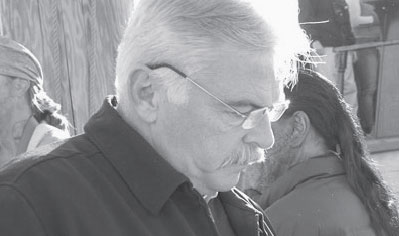
The Algonquian Language Reborn: An Interview with Blair Rudes

CCIC: How did you get into studying indigenous languages?
Dr. Rudes: When I first entered graduate school to study for my Master’s degree at the State University of New York at Buffalo, I was primarily interested in the Celtic languages, in particular Irish Gaelic, since my mother’s side of the family comes from Ireland. I happened to be living at the time in a house with a bunch of other graduate students, and the landlady, herself a graduate student in linguistics, was studying the Seneca language. I had the opportunity to sit in on some of the sessions in which she was being taught the language by a Seneca woman named Esther Blueye. After learning a bit about the Seneca language, I became interested in the Iroquoian languages in general. I was intrigued by how different they were in pronunciation and grammar not only from English, but from other languages I knew such as French, German, and Irish Gaelic. Of all the Iroquoian languages I looked at, I found the Tuscarora language the most interesting because it had the most unusual pronunciation. It turned out that Esther Blueye had a
friend, Dorothy Crouse, who was a speaker of the Tuscarora language.
Esther introduced me to Dorothy, and I spent the next year visiting Dorothy on the Tuscarora Reservation, which is located only about 20 minutes away for where I lived in Buffalo. Dorothy introduced me to the Tuscarora community and, at the end of the year, I was introduced to Amelia Williams, a fluent speaker of the language who was also a Clan Mother. Amelia agreed to teach me the language. I spent nearly every afternoon for the next three years at her house learning the Tuscarora language.
CCIC: What was the first language you started to learn? Did you find it particularly challenging?
Dr. Rudes: The first language that I learned after learning my mother tongue English was French. I then learned Irish Gaelic, Italian, Russian, and German. The first indigenous language that I learned was Tuscarora, and I found it very different from the other languages I knew. The language was so interesting, however, and the time I spent with Amelia was so enjoyable that I found that I learned the language rather easily.
CCIC: What would you say the greatest difference is between how the indigenous languages are constructed versus how, for example, the English language is constructed? Is it a more complicated language structure or is it simpler?
Dr. Rudes: It’s hard to generalize because indigenous languages can differ as much from one another as much as they do from English. A simple answer to the question would be that indigenous languages are neither simpler nor more complex than English, they are just different. Catawba, for example, is sort of like English as seen in a mirror; everything seems backwards. For example where you might say “The old man moved into that new house” in English, you would say in
Catawba the equivalent of “Man old the house new that into moved.”
The differences between the Algonquian and Iroquoian languages and English are much greater than they are for Catawba, whereas they have certain similarities to one another. Those languages behave somewhat like Latin and Greek in that words take a lot of prefixes and suffixes to indicate such things as what is the subject of the sentence, Dr. Rudes on set coaching the actors in The New World what is the object, and where, when, and how often the activity described by the sentence took place. Also, the Algonquian and Iroquoian languages favor compound verbs in which the object of the verb is made part of the verb, sort of like what happens in English when a noun is created from a sentence as in “He keeps the books” becoming “bookkeeper”. To give an example from Tuscarora, the equivalent of an English sentence such as “Once again, she bought a house over there” would be “Over-there-again-she-house-bought” where the hyphens indicate that everything is connected into a single word.
These and other differences in the way words and sentences are constructed in Catawba, Tuscarora, and other indigenous languages such as the Carolina Algonquian dialects mean that one must organize one’s thoughts in a different way in order to speak the languages. Put another way, they reflect a different way of thinking about the world around us and talking about it.
CCIC: How did you end up working on The New World?
Dr. Rudes: As preparations were getting underway in the fall of 2003 for the production of The New World, the director – Terrence Malick – decided that a faithful rendition of the events surrounding the founding of Jamestown required that Powhatan and his subjects speak the Virginia Algonquian language when they first encountered the English. At the time, he was unaware that the language had not been spoken for a couple hundred years. His assistant began calling around to find a native speaker of Virginia Algonquian who could teach the language to the actors in the film. When she found there were none, she started looking for speakers of other Algonquian languages on the East Coast who could teach their language. I guess the idea was that it would be better to use another, related Eastern Algonquian language in the film than to just use English.
She got in touch with an acquaintance of mine, Wayne Newell, who is a fluent speaker and teacher of the Passamaquoddy language, an Algonquian language spoken in Maine. He told her he was too busy to take on the job and referred her to Ives Goddard at the Smithsonian Institution. Ives is probably the foremost authority on the Algonquian languages currently and formerly spoken on the East Coast.
However, he also said he was too busy with other projects and told Malick’s assistant to get in contact with either David Costa, a friend of mine in California, or me. David and I were at the time working with the Mashatucket Pequot Tribal Nation in Connecticut to revive the Pequot language, another Eastern Algonquian language that had not been spoken since the early twentieth century. David and his wife had just adopted a baby girl, and he did not want to be away form her and his wife for the several months it would take to work on the film. Since the work was to be done during the summer when I do not normally teach, I had the time. So, the director was stuck with me.
CCIC: What was it like trying to essentially reconstruct a language (Virginia Algonquian) that hasn’t really been used for centuries?
Dr. Rudes: Put briefly, it was both challenging and humbling.
It was challenging because there was so little information to work with: the short word list published by John Smith; a much longer word list published by William Strachey, a secretary to the Jamestown Colony; and a handful of additional words recorded by other colonists – and because there was very little prior scholarly research on the language.
Smith and Strachey wrote the words of Virginia Algonquian the way they sounded to them using English spelling conventions. However since they were both Englishmen, they did not always hear correctly what was said. And because English spelling is designed for the English language, some sounds of Virginia Algonquian could not be spelled accurately. On top of that, Smith and Strachey sometimes got the meaning of a word wrong. Therefore, I had to spend a lot of time figuring out what Smith and Strachey had actually heard and tried to write down.
In addition given the limited number of words written down by colonists, I often found that the words needed to translate a particular piece of dialogue had not been recorded. In such cases, I made the assumption that the words in Virginia Algonquian would have been similar to the words in other closely related Algonquian languages spoken on the East Coast and used published grammars and dictionaries of such languages as Abenaki, Delaware, Massachusett, and
Passamoquoddy to supplement the vocabulary, adapting the words to the grammar and pronunciation of Virginia Algonquian in the process.
The effort was humbling because I realized I was helping to revive the ancestral language and culture that rightly belonged to others, namely, the living members of the Algonquian tribes of Virginia: the Chickahominy, Mattaponi, Pamunky, Potawomek, and Rappahannock. Although I do have a little Algonquian ancestry, it is from a different tribe; my great grandmother was Abenaki.
CCIC: How similar or different is what we call Virginia Algonquian in contrast to the Algonquian dialects spoken here by the Indians in eastern North Carolina?
Dr. Rudes: The Algonquian spoken in the towns around Albemarle and Pamlico sounds was quite similar to the Algonquian spoken in Virginia. In fact, it is fair to say that they were dialects of the same language. I gave a paper on this subject to Algonquian scholars last October at the annual Algonquian Conference. The different ways in which English authors such as Hariot, Lawson, Smith, and Strachey wrote the same words tends to exaggerate the differences. Briefly, the pronunciation of Carolina and Virginia Algonquian was essentially the same. In addition, there are quite a few words that Carolina and Virginia Algonquian share that are found in no other Algonquian language.
At the same time, there are a couple of words that are different in the two dialects. There are a couple of comments in the historical records that strongly suggest that speakers of Carolina Algonquian andVirginia Algonquian had no trouble talking to one another using their own dialects. They were at least as similar to one another as American and British English, and may have been no more different that are the dialect of English spoken by people born and raised in Wilmington, NC, and the dialect spoken by people born and raised in Boone, NC.
CCIC: What experience have you had in seeing any indigenous languages be “resurrected,” for lack of a better word? Do you see hope for the Algonquian language being brought back into use after so many years?
Dr. Rudes: I assume you are referring here to bringing back to life ancestral tribal languages that ceased to be spoken generations ago as was the case for the Virginia Algonquian language. The terms I and other linguists prefer to use in this situation is language “revitalization” or language “revival,” that is, the act of bringing a language back to life. Some people also refer to languages that have ceased to be spoken as “dormant” languages and talk about “reawakening” the language.
It has only been within the past ten years or so that tribes have made serious efforts to revive their ancestral languages. Reviving a language requires hard work on the part of tribal members and takes sustained effort over a number of years. As a result, there are only a very few cases in which tribes have been successful. The best known case involves the Myaamia language, the ancestral Algonquian language of the Miami Tribe in Oklahoma. Several years ago, a tribal member – Daryl Baldwin – decided to revive the language, so he put himself though college to learn linguistic methods for language revival.
Then he worked with other linguists to learn everything about the Myaamia language that had been written down centuries ago by French missionaries who worked with his tribe. Using that information, he taught himself to speak the language and then began teaching it to his wife and children. After a while, the family spoke only the Myaamia language in their home. He then got other members of the Miami Tribe interested in learning to speak the language and started language classes. Today, his family continues to use the Myamia language in their home, the language classes are well attended, and other tribal members are learning to speak the language.
A similar effort involving an Eastern Algonquian language has been underway within the Wampanoag Tribe in Massachusetts led by a tribal member – Jessie Little Doe Ferimino – who studied linguistics at Harvard University.
However, there are also many cases in which tribes have tried to bring back their ancestral language without success. In most such cases, the tribes have underestimated the time and effort required, and tribal members have lost interest in the project before they succeeded in learning to speak the language. Unfortunately, the number of cases of failure to revive such language far outnumber the number of successful cases. For that reason, I hesitate to guess at the odds for reviving Carolina Algonquian. It will depend in large part on the amount of effort people are willing to put in on learning and using it.
CCIC: You’ve done extensive work with the Tuscarora language – you’ve even written the dictionary — literally. What is the current status of the Tuscarora language? Is it on the verge of dying out, or are you seeing effective teaching and learning take place to preserve the language?
Dr. Rudes: Among the Tuscarora people on the reservation in New York State, there are a few elders who learned the language as children, but have spoken it very, very little since that time. One man in particular, Howard Hill, has been serving as a resource for the language teachers and learners in the community. The language is being taught in the elementary school on the reservation by a woman who learned the language from one of the last fluent speakers, and there is a program for adult learners that is taught by another woman who learned the language from a fluent native speaker and who studied linguistics. Nearly everyone on the reservation has some knowledge of the language, but
few people can carry on a lengthy conversation. I cannot predict the future survival of the language; that will be up to the Tuscarora people.
In large part, it will depend upon how much they value the use of the language, and how hard they are willing to work to keep it alive.
CCIC: Did you learn anything new about the coastal North Carolina Indians that surprised you in your research for reconstructing the Algonquian language?
Dr. Rudes: I guess the most surprising thing was when I discovered, after looking carefully as the information available on the Carolina Algonquian dialects in the works of Hariot, Lawson, and others, that there were a significant number of words of Algonquian origin in the Catawba language. The only way I can explain this observation is by assuming that a fair number of coastal Carolina Algonquian speakers moved to settle in the Catawba-Wateree valley near the Catawba people – probably shortly after the Tuscarora Wars of 1711-1713. An old map of the area from around 1720 shows a village named Wyape not far from the Catawba villages. Wyape may be shortened from Weapemeoc, the name of a coastal Carolina tribal area on the 1590 map of the the area around Albemarle and Pamlico sounds by Theodore De Bry.
CCIC: After having worked on “The New World” and seeing the final product (I’m assuming you’ve seen the complete
film), are you pleased with the linguistic results?
Dr. Rudes: My honest answer would have to be a qualified “yes.” The Virginia Algonquian dialogue that one hears in the film is very well spoken by the actors. They worked very hard at learning the language and did an excellent job. My only regret is that there was a great deal more dialogue spoken by the actors and filmed on site that did not make the final cut for the film. As a result, audiences will hear only a small fraction of the Virginia Algonquian dialogue that I created and that the actors learned and spoke.
CCIC: What projects, if any, do you have in the pipeline now in regards to indigenous languages.
Dr. Rudes: For the past year or so, I have been working with two historians, Helen Rountree and Martha McCarthy, to complete a historical dictionary of the Virginia Algonquian language. It will probably be a couple more years before that project is completed.
I have just about completed a descriptive grammar of the Catawba language and am looking for a publisher. I am also about halfway finished with a dictionary of the Catawba language. I am helping to train a young Cherokee man from North Carolina who is a graduate student in linguistics at Indiana University and who is interested in studying his people’s language. I hope to work with him and other Cherokee young people in their efforts to study and promote the use of North Carolina Cherokee.
In addition, I have two projects in Iroquoian linguistics that I plan to work on: a description of the dialect of Tuscarora that was spoken on the Six Nations Reserve in Ontario and a historical study of vocabulary in the Iroquoian languages.
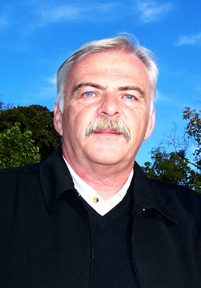
Memorial: Remembering Our Friend, Blair A. Rudes – Linguistics Advisor to CCIC
 Blair A. Rudes – 1951-2008
28 March 2008
It is with much sadness that we report the news that our dear friend and linguistics advisor, Blair Rudes, passed away from a heart attack on March 16th.
Any regular visitors to our website or listeners to our lectures should be well-familiar with Dr. Rudes’ name, as he has been our key source for both the coastal Algonquian and Tuscarora languages.
Dr. Rudes’ full-time profession was as Associate Professor of English at the University of North Carolina at Charlotte.
He is best known in the Indian community, however, for his extensive work in documenting endangered indigenous languages (such as Tuscarora) as well as reconstructing Native languages that have been long lost to history and assimilation (such as coastal Algonquian and Catawba).
His Tuscarora-English/English-Tuscarora Dictionary was published by the University of Toronto Press in 1999. The Tuscarora Nation honored him for his work on the Tuscarora language in 2006.
Dr. Rudes also reconstructed the Algonquian language of Virginia for the New Line motion picture The New World, which starred Colin Farrell and Q’orianka Kilcher. (The dialect of Virginia Algonquian he worked on for the film is nearly identical to the Algonquian language spoken here in coastal North Carolina in the pre-colonial and early colonial era)
In Winter of 2006, we did an interview with Dr. Rudes for our newsletter The Carolina Pine on how he went about researching and resurrecting a dead language that had not been spoken for centuries using only the scarce written records made by English explorers in the early colonial era. (See link below for article.)
In recent years, Dr. Rudes had been hard at work compiling the Catawba lexicon for a three-volume set titled The Catawba Language.
We will be ever grateful for the legacy left by our friend, Blair Rudes. Through his life’s work in indigenous languages, he created a bridge from the past and brought the words of our distant ancestors to this and future generations.
Thanks to Blair Rudes, we can know how our ancestors said hello, how they told their children to eat, to sit still, to come quick, or to simply say, “I love you.” We know the names they had for themselves and their mothers and fathers and sisters and brothers
To have worked so diligently and passionately to give us this gift, that he saw the languages of our ancestors as important and worthy of his full attention and documentation, is something for which there are no words — in any language — to express our gratitude.
Thank you, Dr. Rudes. We love you and will miss you.
Winkan nupes. (Sleep well.)
In Memory of Blair Rudes… [Leave your comments]
Earnest Willis, Craven Co., NC
I really hated to hear about the sad news of the passing of Dr. Rudes. While I did not know him personally reading and seeing how he put whole languages back together I feel like I at least knew what type of fellow he was. The work he has done is greatly appreciated by many and his legacy will live on! I first learned about Dr. Rudes through CCIC , since then I have learned just how important his work was to so many. I also certainly hope there is a directors cut out there of THE NEW WORLD that shows more of the language Dr. Rudes put together for many generations to come.
God bless you Dr. RUDES!
Sara Whitford, Carteret Co., NC
Having the opportunity to know Dr. Rudes and his work has been such a blessing to me, personally. I owned his Tuscarora-English/English-Tuscarora Dictionary several years before I had the opportunity to speak with him. I actually sought him out back in 2005 when I heard of his work on The New World. As a descendant of Algonquian language speakers, I was excited at the prospect of having someone help me learn to speak words that no one in my family has been able to speak for centuries. Dr. Rudes and I had many conversations and shared many e-mails always with me asking lots of language questions and him always eagerly answering them. I’ve also directed a number of folks with specific language questions to Dr. Rudes over the last few years through my work with CCIC. He’s been an open book to anyone taking the time to tap into his vast knowledge of indigenous languages.
It had been his plan to work on an Algonquian-English/English-Algonquian dictionary and I’m saddened to think it might never come to pass. I will do all that I can to obtain any of his written or recorded work on Algonquian language and make it available on the CCIC website.
Without a doubt, Blair Rudes’ legacy of language will long outlive any of us!
Thank you, Dr. Rudes!
Francene Patterson, Sanborn, NY
The Tuscarora Nation and our language will carry on with heavy hearts and a mournful spirit. We were given a gift from the Creator: the knowledge and wisdom of Dr. Blair Rudes, and his legacy will live on through his works. The elders he worked with in the 70’s are no longer with us, but their words live on because of the linguist, and the friend everyone knew as… Blair. Our language restoration process will continue, because of his efforts to compile the Tuscarora language. His wisdom and aptitude for our language has touched all, from the Kindergarten class to adult student. I will need to stop myself now from wanting to call or e-mail him for that one elusive question about my language. Blair was my mentor, willing to prepare lessons for me through Empire State College, so that I may obtain my degree in linguistics also. There is a sense of disconnection now, a gap, a void, in our language soul.
Michael McKay, Virginia
I’m sorry to hear of Dr. Rudes passing. I never actually met him but I’ve heard many good things about his work, especially with the Tuscarora and Algonkian languages.
Teresa Morris (Founder of CCIC) – Carteret Co., NC
It is rare especially these days and the times in which we live to witness an individual filled with the kind of vision and scholarly passion for Indian people that goes way beyond the current standard course of study, or printed page.
I dare imagine where we’d be today and for generations yet to come if Dr. Rudes had chosen another line of work or scholarly pursuit. I’m so thankful he chose to go the distance in helping those of us come full circle and graduate towards self-actualization.
Dr. Rudes faithfully chose to stay the course in answering his higher calling for the love of indigenous languages by breathing new life into words that have not been spoken for countless generations.
I believe one of the ways in honoring Dr. Rudes lifelong work today is to encourage people, schools and the public-at-large, in making it a priority to acknowledge, teach and pass forward all that Dr. Rudes has left behind to any one of us, albeit native and/or non-native as an ongoing SACRED TRUST.
When all is said and done, his restoration of our ability to fluently speak the language that connects us to our ancestors speaks volumns now and will continue to do so for generations yet to come with respect to the love we have for our indigenous roots, as well as in honoring a man who has cleared the pathway for others daring to follow his lead.
Rebecca Hein
I, too, feel so sad to hear of his passing. To have such a dedication for this tedious type of research
was a blessing to many, and I hope his diligence will inspire others to do the same. I watched New World with such intensity wanting to understand everything that was said! I think it is a good idea to offer his publications’ list for all to see. Again express my condolences to his loved ones.
Stan Allen – New Bern, NC
I met Blair Rudes on line through the auspices of CCIC– and thanks again for that, Teresa and Sara!
I had been wanting to send a word list, mainly from early NC maps, to someone for linguistic analysis. I spent a lot of time thinking about this, deciding it would be better to send it to an academic researcher rather than, say, to the Six Nations Iroquois Reserve in Canada or the Six Nations in New York. I felt that with the words having been transcribed into English spellings in the 1580’s through 1750’s by non-linguists with more or less education, it would take a scholar to figure it all out. Little did I know that there was just that person here in our own state, Dr. Blair A. Rudes, of the University of North Carolina at Charlotte.
When I approached Blair in September, 2007 about sending the list I was very “diplomatic”, asking if he could just see if they “looked” Iroquoian (my then-main interest). I was careful to say that I knew translating could be a research project in itself so I wasn’t asking for that. He asked me to send the list, which consisted of over twenty words, and almost immediately sent back not only his opinions about probable language families but also tentative translations for many of the words.
The most interesting were from the 1733 Moseley map. I’d noticed an unusual cluster (unusual for that date and for that map) of nine obviously Indigenous creek names at the headwaters of Northeast Cape Fear River. I thought some looked Tuscaroran and wondered if they might be relevant at least in part to formation of Lumbee and other Indian communities after the Tuscarora War of 1711, when so many of the shattered tribes were withdrawing as refugees to NC’s swamps and border hills, or heading north to New York and other areas in between. This cluster was so unusual on the map that it It seemed the map-makers’ informants would have had to be Indian People themselves. The creek names must have been gathered around 1730 when Europeans began moving into the NC interior. This was pretty late actually as the Lumbee were also being “discovered” then, in their log cabins on Drowning Creek, now Robeson County.
Blair said that most of these creek names were indeed Tuscarora words. For example he wrote that “Scarunteh” was probably “Lone Tree”, and “Cotehasky” was “probably a Tuscarora word containing the root ‘teh’, ‘sand’; perhaps something like ka’tehe:Okye, ‘long sand place’ (i.e. ‘Long Beach’)”.
There were three creek names which he said were definitely not Tuscaroran/Iroquoian: Anaschun, Abescaru and Lanatta. Could any of these be Siouan, from the Woccon or Waccamaw who were also nearby on Neuse before the Tuscararoa War? Blair thought Abescaru looked Algonkian, which would be another possibility for refugees moving inland after the war.
If there were Tuscarora, Siouan, and Algonkian people on these creeks in c.1730, where did they go? There is no Native community in the immediate area now, but the Coharie are a short distance away in Sampson on their name-sake creek, and of course the Lumbee beyond them– as well as people/families not specifically part of Indian communities today, who retain traditions and documentary evidence of Indian ancestry.
Incidentally Blair said “Coharie”, “probably contains the Tuscarora root ‘her’, ‘green, grass’. Kahere’kye wouold mean ‘grassy place, field”. (And in addition, one of the insurgent Tuscarora mentioned in the War documents was James Cohery.)
Blair was always so willing and “friendly”– a long way from the kind of academic who sees everyone else as an amateur (which I certainly am) operating somewhere way beneath them.
In our correspondence he showed me that I was jumping to conclusions about the ethno-linguistic identities of some of the ancient tribes. He told me something very important, that the Carolinas at the time of European contact, “were perhaps the most culturally diverse area in North America outside of southern California”. I knew the Algonkians and Iroquoians came down from the northeast, the Siouans from the mid-west, the Cherokee from….Mississippi?, the Muskhogeans from the deep south. But Blair said there were also some tribes in NC whose language affiliations have defied identification so far. These just happen to include the ones I’m most interested in: Coree, Neusiok, Eno, Shakori or Shocco, and also maybe Saxapahaw and Keyauwee, the last four most usually lumped in by researchers with nearby Siouan speakers. The whole language family thing is so important because it tells so much about origins and culture.
Blair felt that the 16th and 17th century Spanish explorers’ documents will eventually give clues, if they can be found or if they surface out of archives in Spain or maybe in the Caribbean islands. He had already moved into these sources with his search for the mysterious city of Chicora, which he felt on linguistic evidence to be on the NC coast rather than at SC’s Winyaw Bay as previously thought.
Blair told me that the lingistic ID of my main focus, the Neuse and Coree on the coast would probably have to wait for more information from those Spanish sources, as their few recorded words were clearly neither Algonkian or Iroquoian. His passing therefore is an immediate loss in just this area alone, since he was already interested in and beginning to look at those Spanish sources.
I’d also like to express my appreciation, as I did to Blair, for his work in “The New World”. Yes had I been directing, I would have done a lot less love story, and I also think the internal monologues were a big and irritating mistake. But the movie did show that the Indigenous People were both very spiritual and also fun-loving, exactly as they are today. Blair coached the cast on Algonkian pronunciation. Whatever one might feel about the plot-line and other aspects, this movie is surely a land mark in Native American representation in movies, thanks especially to Blair Rudes.
I was about to send Blair a few more words, including Wee-quo-whom, which Lawson recorded as the tribal name for Falls of the Neuse. I wonder if this might be an Eno or Shocco word and therefore maybe another clue to their identity, still trying I guess to connect Coree at mouth of Neuse and those two tribes at the other end of Neuse River.
Maybe there is someone else out there somewhere who can say, but will they be as approachable, as willing to share, as friendly as Blair Rudes?
Yes he will be missed by those who knew his work, and especially by those who had the good fortune to know him, if only on line.
Pamela Graham DeRenesis – Raleigh, NC
I was very sad to hear about the passing of Dr. Rudes. He was always so willing to share his knowledge and his research. I had met him for the first time last year at the NC Indian Unity Conference where readily accepted my invitation to discuss his efforts on preserving Indian languages. I also reached out for his help last year to help with the naming of plants in the native landscaping around the National Museum of the American Indian. He will be missed!
Extracts from the Discoveries of John Lederer
From Hawks’ History of North Carolina, Vol. 2. “In three several Marches from Virginia to the west of Carolina, and other parts of the Continent; begun in March, 1669, and ended in September, 1670. Collected and translated out of Latin from his discourse and writings, by SIR WILLIAM TALBOT, Baronet. Printed in London, in 1672.” [Read more…] about Extracts from the Discoveries of John Lederer
Laws Regarding Servants and Slaves
Describes early colonial North Carolina laws in reference to indentured servants and slaves, particularly in regards to race. For instance, the unfortunate, innocent child born to a white servant woman while under indenture was placed into bondage at birth until age 31. For getting pregnant during her indenture, she would be bound to serve an additional two years, and if the father of the child was Indian, black, or mulatto, on top of serving two additional years, she’d also have to pay an enormous 6 pound fine at the end of her servitude. [Read more…] about Laws Regarding Servants and Slaves
1699 Articles of Agreement with the Bay (Bear) River Indians
From the North Carolina Colonial Record. Agreement between chief men of the Bay River Indians and colonials assuring the that the Indians would have no trouble with the English provided they assist them in various manners and turn over any Indians who have, or were planning to commit crimes against the English to English authorities to face justice. [Read more…] about 1699 Articles of Agreement with the Bay (Bear) River Indians