An excerpt from von Graffenried’s Account of the Founding of New Bern. Details the journey made by Lawson and von Graffenried into Tuscarora territory, including their capture, trial, and the execution of John Lawson.
An excerpt from von Graffenried’s Account of the Founding of New Bern. Details the journey made by Lawson and von Graffenried into Tuscarora territory, including their capture, trial, and the execution of John Lawson.
IMPORTANT! Please note that individuals listed here are not necessarily Indian. They may be free blacks, mulattos, mestizos, or any other non-white citizens. This is just intended to be a potential starting point for your research.
A cross-reference using surnames, known names of Indian families, and historic Indian villages
In researching Indian ancestry, it’s important to note that for a variety of reasons in history (usually economic or socio-political), Indian people were often recorded as any race other than Indian. Sometimes “White,” other times “Black,” or “Negro,” and other times “Free Person of Color,” “Colored,” or “Mulatto.”
The entries below have been taken from transcriptions of the 1790 Federal Census for several eastern North Carolina counties. The notes in the right column correlate to the 1790 county/family names to the left. Known Indian villages are given with modern-day equivalent town names, as well as any surnames that appear as “Other Free” on the 1790 census that are surnames also found amongst known Indians in documents (deeds, court records, etc.).
Please keep in mind that just because someone is of a particular surname that has at some point been associated with a particular tribe DOES NOT NECESSARILY mean that the person was of that tribe. It is necessary to establish a “preponderance of evidence” before making the assumption that someone was of a particular Indian nation.
| Families by County and Surname | Notes Relating to Known Indian Communities and/or Surnames |
| Beaufort County | |
|
Historical Indian Communties:
|
| Bertie County | |
|
Historical Indian Communties:
Known Indian Surnames:
|
| Carteret County | |
|
|
| Chowan County (Edenton) | |
|
|
| Craven County | |
|
Known Indian Surnames:
|
| Currituck County | |
|
Historical Indian Communties:
Known Indian Surnames:
|
| Dobbs County | |
|
Historical Indian Communties:
|
| Edgecombe County | |
|
Historical Indian Communties:
Known Indian Surnames:
|
| Gates County | |
|
Historical Indian Communties:
Known Indian Surnames:
|
| Halifax County | |
|
|
| Hertford County | |
|
Known Indian Surnames:
|
| Hyde County | |
|
Historical Indian Communties:
|
| Jones County | |
|
Historical Indian Communties:
|
| Martin County | |
|
Known Indian Surnames:
|
| Northampton County | |
|
Known Indian Surnames:
|
| Onslow County | |
|
Historical Indian Communties:
Known Indian Surnames:
|
|
Known Indian Surnames:
|
| Perquimans County | |
|
|
| Pitt County | |
|
|
| Tyrrell County | |
|
Known Indian Surnames:
|

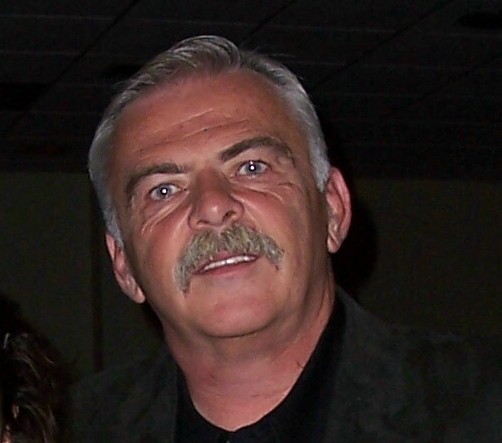
Blair A. Rudes, 56, died suddenly on March 16, 2008 in Charlotte, NC.
Dr. Rudes was born in Gloversville, NY on May 18, 1951 and spent his youth in Piseco, NY. After completing his early education at Piseco Elementary School and Wells Central High School, he attended the State University of New York at Buffalo where he completed his undergraduate and graduate work. He was awarded his Doctorate Degree in Linguistics in 1976.
At the time of his death, Dr. Rudes was an Associate Professor of English at the University of North Carolina at Charlotte. He had been on the faculty of the University since 1999.
Dr. Rudes was an internationally known linguist, speaking many languages, but with a particular expertise in Native American languages. He published and edited many books and scholarly articles in his area of expertise. In 1999 his Tuscarora-English Dictionary was published by the University of Toronto Press and at the time of his death he was completing a three volume work titled “The Catawba Language” for the University of South Carolina press. Most recent accomplishments of note were work he had done as a dialect consultant and coach for two Hollywood movie productions. In 2004, he was hired by Dreamworks to work with the cast of the move “The New World”. This assignment required him to reconstruct the long extinct Virginia Algonquian language and then coach the cast in its syntax and pronunciation.
His work contributed significantly to the historical accuracy of the film and gained notoriety when it was featured in the “New York Times” Science Section and was the subject of a personal interview with National Public Radio. Following his work on “The New World” he was again recruited by Dreamworks to assist with the 2008 film “The Ruins” where he served as the Mayan Dialogue Coach.
In recent years, he was also the recipient of several important honors. In 2006, he was recognized by the Tuscarora Indian Nation for his contributions to preserving their language. In 2007, the South Carolina General Assembly passed a resolution recognizing the work he had done for the South Carolina Commission for Minority Affairs. Most recently, on April 5, 2008, he was awarded the University at Buffalo’s Distinguished Alumni Award.
(Excerpt from obituary printed in The Recorder, May 22, 2008.)